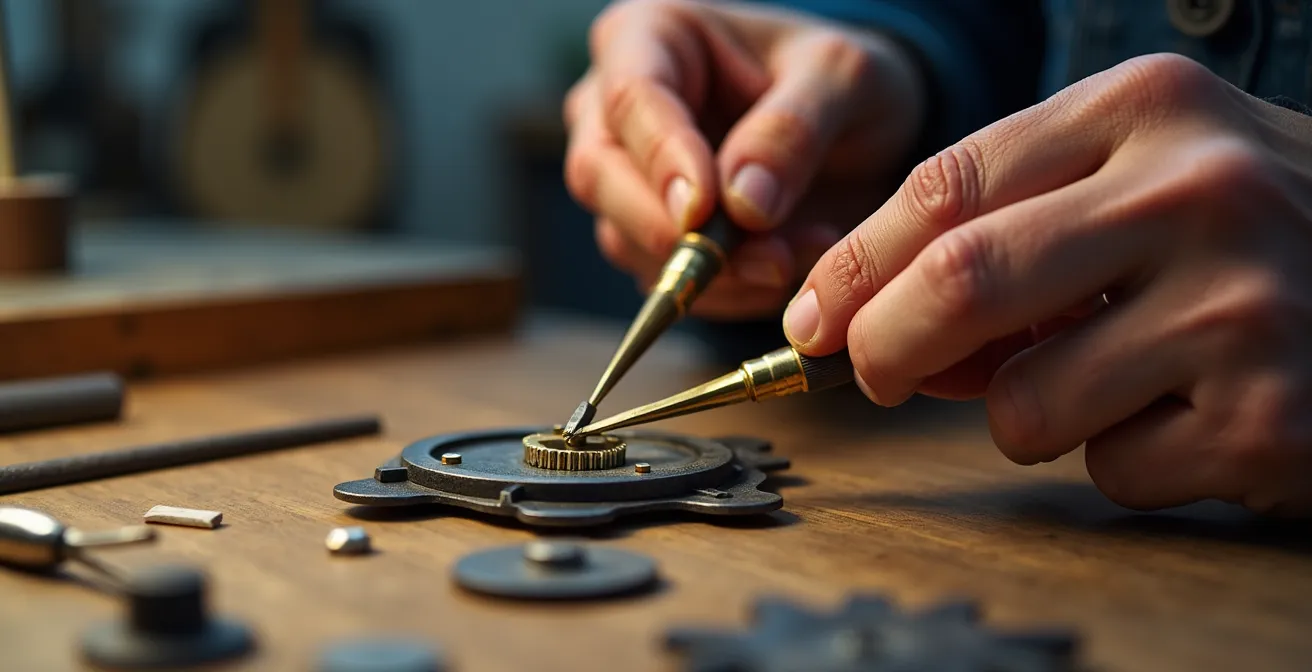
The polished marketing materials promise a beginner-friendly journey into horology. You’ll assemble a vintage movement, learn precision skills, and leave with a working timepiece. But the promotional copy rarely mentions what actually unfolds during those four hours—the sensory recalibration, the strategic instructor silences, or the moment your hands start solving problems your mind hasn’t yet understood.
Toronto’s growing watchmaking workshop scene attracts curious professionals, hobbyists, and craft enthusiasts seeking hands-on experiences with mechanical artistry. Whether you’re considering watchmaking classes in Toronto or simply wondering what these sessions entail, the reality diverges significantly from the glossy brochures. The actual experience reveals a carefully orchestrated pedagogical sequence designed to teach through tactile discovery rather than verbal instruction.
This exploration traces the arc from initial tool contact to the subtle cognitive transformation that extends beyond the workbench. What emerges is a portrait of embodied learning—where physical intuition precedes intellectual comprehension, where predictable failures function as teaching instruments, and where a three-hour workshop catalyzes lasting shifts in how you perceive mechanical objects.
Toronto Watchmaking Workshops: 5 Key Insights
The first hour confronts you with microscopic tolerances and specialized tool vocabulary that contradicts the beginner-friendly promise. Assembly follows a deliberate pedagogical sequence—mainspring teaches consequence management, gear train develops spatial reasoning, escapement introduces precision thresholds. Your hands develop micron-level sensitivity before your mind articulates what they’re detecting. Three universal beginner mistakes appear in predictable order, each functioning as a diagnostic checkpoint rather than a setback. The lasting impact manifests as a maker’s eye that fundamentally alters how you evaluate craftsmanship, pricing, and the human labor embedded in precision goods.
How the First Hour Diverges From What’s Advertised
The workshop description mentioned hands-on assembly and all tools provided. What it didn’t convey was the immediate sensory overload—the numbered tweezer sets arranged by decreasing size, the screwdriver blades specified by fractions of millimeters, the magnifying loupes that transform your depth perception. Within ten minutes, the promised simplicity collides with the reality of microscopic tolerances.
Instructors observe body language during this calibration phase. The rushed students grip tools like pencils, applying writing pressure to components that require surgical delicacy. The overly cautious freeze entirely, paralyzed by the fragility of balance wheels and hairsprings. Research on fine motor skill development indicates that beginners typically sustain 20 minutes of sustained focus for developing crucial small muscle groups through intentional hand movements, yet watchmaking demands concentration stretches of 45-60 minutes.
The sensory recalibration begins immediately. Your eyes must develop close-focus endurance—staring at components smaller than a grain of rice for extended periods. Your fingertips must learn to detect spring tension through stainless steel tools. The classroom atmosphere shifts from chatty anticipation to meditative silence as students realize this craft demands internal focus rather than collaborative exchange.
The IWC Toronto Workshop Reality Check
The pacing was perfect with space for intelligent questions, but after ten minutes hands moved with imperceptible uncertainty as handling delicate parts took its toll. What marketing materials frame as accessible introduction translates to immediate confrontation with professional-grade precision demands.
This gap between expectation and reality isn’t accidental—it’s the first pedagogical tool. The psychological shift from consumer mindset to maker mindset begins before any actual assembly work. You transition from evaluating the experience as a customer to engaging as an apprentice, accepting that competence will emerge through struggle rather than smooth progression.
| Aspect | Marketing Promise | Actual Experience |
|---|---|---|
| Duration | 4 hours total | 4 hours with breaks |
| Difficulty | Beginner-friendly | Immediate precision demands |
| Tools | All provided | Professional-grade unfamiliar equipment |
| Support | Expert guidance | Strategic instructor silence during key moments |
The social-to-solitary transition completes the first hour’s transformation. Initial nervous laughter and small talk fade as the physical demands become apparent. Eyestrain emerges. Hand steadiness becomes conscious rather than automatic. The silence isn’t uncomfortable—it’s necessary, creating space for the concentration this work requires.
How Assembly Teaches Your Hands a New Language
After the initial psychological adjustment and tool familiarization, students enter the core activity—but assembly isn’t just mechanical repetition; it’s a carefully orchestrated introduction to tactile literacy. The movement placed before you isn’t random; most Toronto workshops use vintage manual calibers like the Unitas 6497 or 6498, chosen specifically for their pedagogical advantages.
These vintage movements offer visible mechanics—you can see every gear interaction, every lever engagement. Unlike modern automatic movements with their complex winding systems and hidden components, manual movements reveal their logic. More importantly, mistakes are reversible. Cross-threaded screws can be backed out, misaligned gears can be repositioned, and spare parts remain plentiful through vintage watch suppliers.
The assembly sequence follows deliberate instructional design. You start with the mainspring barrel—a lesson in consequence management. Wind it incorrectly and stored energy releases unpredictably. This teaches respect for mechanical forces before introducing delicate components. The mainspring demands attention to direction, tension, and control.
Next comes the gear train—center wheel, third wheel, fourth wheel, escape wheel. This stage develops spatial visualization as you learn gear mesh tolerances. The wheels must engage precisely, teeth interlocking with specific depths. Too shallow and gears skip, too deep and friction prevents rotation. Your fingers learn to feel correct mesh pressure through the resistance feedback transmitted up the tweezers.

The escapement arrives third, introducing the precision threshold where millimeters become enemies. The pallet fork must clear the escape wheel teeth by tolerances measured in microns. The balance wheel must swing freely on its jeweled bearing; wobbling indicates improper seating. This stage separates students who’ve internalized tactile problem-solving from those still seeking verbal instruction.
Instructors intentionally withhold explanation during initial assembly attempts. When a jewel refuses to seat properly, they watch you struggle for 60-90 seconds before intervening. This productive failure window forces you to develop diagnostic thinking—feeling when you’re cross-threading versus encountering legitimate resistance, sensing when pressure should become force versus when it signals misalignment.
The learning milestone appears when questions change. Students stop asking what do I do next and start asking why won’t this fit. This shift from procedure-following to diagnostic thinking marks real skill development. Your hands have begun speaking the language of mechanical assembly, even as your conscious mind lags behind in comprehension.
How Precision Becomes Instinct Before Comprehension
During the assembly work just described, a parallel learning process unfolds beneath conscious awareness—the body acquiring precision as a physical language separate from intellectual understanding. This phenomenon, known in cognitive science as embodied cognition, reveals why craft learning differs fundamentally from academic instruction.
The tactile threshold revelation arrives suddenly. Your fingers detect that a balance wheel pivot hasn’t seated properly in its jewel bearing—you feel the difference between resting on the rim versus settling into the cup. Your eyes can’t see this micron-level variation, yet your fingertips register it through the tweezer feedback. You sense snug versus tight, the distinction determining whether the wheel will swing freely or bind against friction.
This haptic sensitivity develops faster than conscious comprehension. Students often perform assembly steps correctly while unable to articulate why that particular angle or pressure worked. The muscle memory for proper tweezer grip—firm enough to control components, light enough not to bend them—forms before conceptual understanding of force distribution.
Instructors recognize an interference effect where conscious attention disrupts emerging motor patterns. Analytical students who try to intellectualize every movement often perform worse than those who trust developing intuition. When overthinking appears, experienced teachers redirect focus—stop thinking about the angle, just feel when it clicks—deliberately shifting attention from cognitive to somatic processing.
The proprioceptive calibration happens unconsciously. Your hands learn optimal tweezer pressure gradients, developing steady micro-movements for component alignment. Wrist angle memory forms, the position providing both visual access and mechanical control. These physical competencies emerge through repetition and feedback, bypassing verbal instruction entirely.
Physical markers signal developing competence. The white-knuckle tool grip relaxes into natural control. Breath-holding during delicate work transitions to normal respiratory rhythm. Hunched shoulder tension releases into upright ease. These somatic shifts indicate that precision has become instinctive rather than effortful, embedded in muscle memory rather than conscious calculation.
This embodied learning dimension connects watchmaking to other slow mindful hobbies where physical practice develops tacit knowledge. Like pottery centering or woodworking joinery, watchmaking assembly teaches through touch and repetition, building competence that precedes and often exceeds verbal explanation. The workshop reveals this phenomenon in compressed timeframe, making visible a learning process usually invisible in extended apprenticeships.
How Mistakes Unlock the Real Learning Objectives
After developing initial instinctive precision, students inevitably hit the failure phase—but these aren’t random errors; they’re predictable learning checkpoints that reveal whether foundational concepts have truly transferred from demonstration to internalization. Experienced instructors don’t prevent these mistakes; they orchestrate them as essential pedagogy.
The three universal beginner failures arrive in sequence. First, the dropped balance wheel—every student does it, usually within the first 90 minutes. The component slips from tweezers, bouncing across the work surface or disappearing into the floor void. This teaches visceral respect for delicacy, transforming abstract warnings about fragility into embodied caution.
Second comes the cross-threaded bridge screw. You feel resistance but continue turning, assuming it’s normal tightness. The instructor watches silently as you strip the threads, then asks: does that feel right? This failure teaches the tactile distinction between proper threading resistance and forced misalignment. The feel becomes permanently encoded in muscle memory.
It came out well after two flying screws and one spring that fell in my lemonade.
– jrumayor, WatchCrunch
Third arrives the bent hairspring—the irreversible consequence that teaches patience over speed. Rushing the balance assembly, you apply lateral pressure to the gossamer-thin coil. It deforms permanently, rendering the movement inoperative. Unlike the replaceable balance wheel or repairable screw threads, this damage is final. The pedagogical honesty of Toronto workshops maintains real stakes.
Instructors time their interventions precisely. Research on productive failure suggests a 90-120 second window where problem-solving attempts cement learning even when unsuccessful. Before this threshold, struggle builds diagnostic skills; beyond it, frustration triggers disengagement. Skilled teachers watch for the transition markers—tool pressure increasing, breathing becoming shallow, shoulders tensing—intervening just before the counterproductive frustration point.
Specific mistakes reveal mental model gaps. Cross-threading indicates spatial visualization deficits—students haven’t internalized the helical geometry of screw threads. Applying force when meeting resistance demonstrates lack of mechanical empathy, the intuitive sense that machines communicate through feedback. Rushing signals performance anxiety, external validation seeking rather than process focus.
Many Toronto workshops use genuinely vintage movements rather than modern training calibers with synthetic jewels and readily replaceable parts. This pedagogical honesty teaches real-world stakes. When hairspring damage means permanent movement death, patience becomes non-negotiable rather than aspirational. The consequence weight accelerates learning in ways protective pedagogy cannot.
Key Takeaways
- The first hour deliberately confronts expectations with microscopic tolerances and specialized vocabulary to trigger mindset shift from consumer to maker
- Assembly sequences follow hidden pedagogical design—mainspring teaches consequence, gear train develops spatial reasoning, escapement introduces precision thresholds
- Embodied cognition creates micron-level tactile sensitivity before conscious comprehension, with physical intuition preceding intellectual understanding
- Three universal beginner failures function as diagnostic checkpoints, with instructor silence during productive struggle windows cementing learning
- Lasting cognitive transformations emerge as maker’s eye perception, empathy for craft labor pricing, and fundamental shift from consumption to appreciation
How the Workshop Rewires Your Relationship With Objects
Beyond the immediate skills and completed movement, the workshop catalyzes subtle but persistent cognitive changes that only become apparent after returning to daily life outside the focused intensity of the workbench. These transformations extend far past horology, reshaping how participants perceive manufactured objects, evaluate craftsmanship, and understand the human labor embedded in precision goods.
The perceptual shift students report first involves developing what makers call reverse-engineering vision. Looking at watches, electronics, furniture, or any assembled object, the question changes from what does this do to how was this assembled. You notice parting lines indicating molding processes, fastener types revealing assembly sequences, finishing quality signaling hand work versus automation.
This new perceptual lens alters shopping behavior. Students report pausing before purchases, mentally deconstructing construction methods and estimating labor hours. The impulse consumption that characterizes modern retail encounters friction from newfound understanding of production complexity. A cheap quartz watch becomes not just inferior timekeeping but evidence of corner-cutting in dozens of micro-decisions about tolerances, materials, and assembly care.
The empathy transformation manifests in social contexts. Students find themselves noticing and commenting on others’ watches—identifying brands, complications, and finishing quality that previously went unnoticed. More significantly, they defend artisan pricing in conversations, having internalized the hours-per-millimeter reality of precision work. The connection between craft appreciation and value assessment parallels how understanding antique jewelry value transforms from price speculation to recognition of artisanal technique and historical craftsmanship.
Unexpected skill transfers emerge across unrelated domains. Students report improved patience in coding (debugging as diagnostic problem-solving), cooking (mise en place as component organization), and parenting (recognizing productive struggle windows). The diagnostic thinking developed through tactile problem-solving—distinguishing actual problems from symptoms—transfers to troubleshooting in any complex system.
Material evidence of continued engagement appears in post-workshop behavior. Some students purchase entry-level tools—tweezers, screwdrivers, loupes—revealing intention to continue practice. Others join online watchmaking communities, subscribe to YouTube restoration channels, or purchase vintage movements for home disassembly. Battery replacement tasks become disassembly opportunities, applying workshop skills to everyday repairs.
The cognitive rewiring runs deeper than hobby interest. Students describe reduced phone anxiety—improved patience with slow processes in an acceleration-obsessed culture. They report heightened attention to detail in professional work, noticing quality gradations previously invisible. The meditation-like focus state achieved during assembly becomes accessible in other contexts, a portable skill for managing attention in distraction-saturated environments.
What marketing materials frame as a three-hour workshop introduction functions as a catalyst for ongoing transformation. The assembled movement becomes a physical anchor for these cognitive shifts—a reminder that competence emerges through struggle, that patience yields precision, and that understanding how things work fundamentally changes how you move through a world of manufactured objects. The real product isn’t the vintage caliber in your hand; it’s the maker’s perspective now embedded in your perception.
Frequently Asked Questions About Watchmaking Workshops
How long does it take for mistakes to become valuable learning experiences?
The transformation happens rapidly within the workshop timeframe. The four hours compress what would normally be weeks of learning into an intensive session where mistakes function as immediate teaching moments. Students report that errors made in the first hour inform better decisions by the third hour, with the rapid learning curve making failures feel productive rather than discouraging.
Should beginners practice on expensive vintage movements?
Most Toronto workshops start students with Unitas 6497 or ST36 calibers specifically because they balance authenticity with accessibility. These movements are larger than typical calibers, making components easier to handle for beginners. Spare parts remain plentiful and affordable through vintage watch suppliers, meaning mistakes do not carry prohibitive replacement costs while still using genuinely mechanical movements rather than simplified training models.
What physical demands should students expect?
Close-focus vision endurance becomes the primary challenge, with sustained attention to millimeter-scale components causing eyestrain for most beginners. Hand steadiness matters but develops quickly through practice. Expect periods of sustained concentration requiring silence and minimal movement—the work demands meditative focus rather than physical strength or dexterity beyond normal range.
Do workshop skills transfer to watch repair and maintenance?
The assembly fundamentals transfer directly to basic service tasks like battery replacement, bracelet adjustment, and simple movement cleaning. However, professional-level repair requiring specialized tools, diagnostic equipment, and extensive parts knowledge remains beyond workshop scope. The primary value lies in developing mechanical literacy—understanding how movements function and what different service procedures entail—rather than comprehensive repair competency.