
Scroll through any wellness marketplace and you’ll encounter the same reassuring phrases: “premium quality”, “carefully sourced”, “pure ingredients”. Yet when a probiotic arrives with no visible batch number, or a herbal supplement lists a manufacturer address that doesn’t exist, those promises dissolve. The UK wellness market — valued at multiple billions annually — operates across a spectrum of accountability, from rigorously regulated online pharmacies to third-party marketplace sellers with minimal oversight. The difference often lies not in marketing language, but in a technical capability most consumers never think to verify: product traceability. Understanding what this term actually means in practice, and learning to spot its absence in under three minutes, can be the difference between a product that meets pharmaceutical storage standards and one that’s been sitting in an unregulated warehouse for months.
What Traceability Actually Means Beyond the Marketing Claims
When a wellness brand advertises “full transparency” or “premium sourcing”, what tangible evidence backs those statements? Traceability, in its technical definition, refers to the documented ability to track a product through every stage of its supply chain: from raw material origin, through manufacturing and distribution, to the final consumer. This isn’t about feel-good marketing language — it’s a compliance framework that enables rapid action when safety issues emerge.
According to the FSA‘s official guidance on food supplement supply chains, suppliers must be registered as a business with their local authority and provide fully referenced invoices and receipts. This creates a formal chain of accountability. Labels must display the business name and address of either the brand owner or the importer, ensuring the responsible operator is identifiable on every product. Without these elements, traceability exists only as a theoretical concept, not a verifiable reality.
Your 3-Minute Traceability Briefing
- Traceability means documented evidence of a product’s journey from manufacturer to your doorstep — not vague quality claims
- Licensed online pharmacies face mandatory regulatory standards that marketplace sellers can bypass entirely
- A basic verification checklist (checking GPhC registration, batch numbers, storage standards) takes approximately three minutes per purchase
- Enforcement data shows persistent failures: since 2021, regulators have taken action against dozens of online platforms for traceability-related safety issues
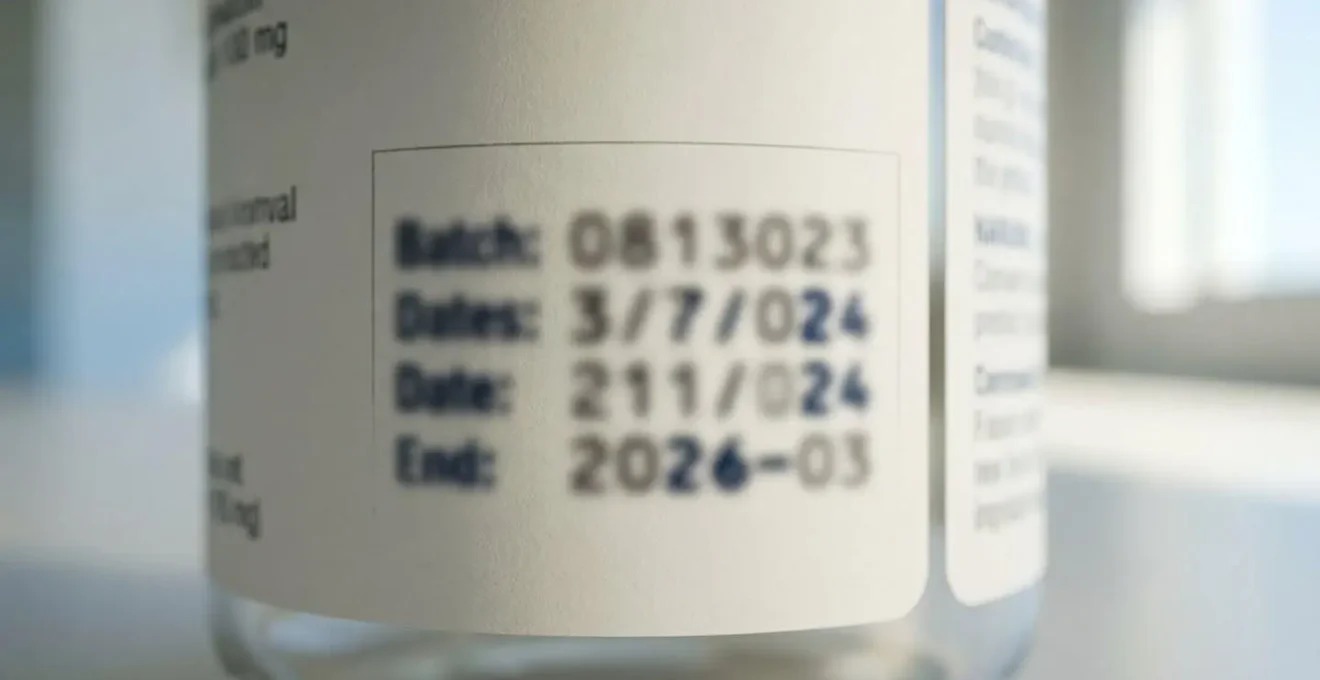
The practical difference becomes clear in adverse event scenarios. When a batch of omega-3 supplements is found to contain oxidised oils due to improper storage, documented batch tracking allows regulators to identify precisely which units were affected, trace their distribution path, and issue targeted recalls. Products lacking this documentation cannot be recalled with precision — the entire product line, or worse, nothing at all, becomes the default action.
Consider the distinction between ingredient transparency and supply chain traceability. A brand might list “organic ashwagandha root extract” on its label while providing zero documentation about which certified farm supplied the raw material, which facility processed it, or how temperature control was maintained during shipping. Genuine traceability closes this gap by requiring verifiable documentation at each handover point — supplier certifications, batch production records, shipping manifests, storage logs. Wellness products often contain active compounds sensitive to environmental conditions. Probiotics lose viability above certain temperatures; vitamin stability degrades with light exposure; botanical extracts can become contaminated if processed in non-sterile environments. Traceability systems document that these critical parameters were monitored and maintained.
Why Online Platforms Make (or Break) Product Transparency
The structural differences between purchasing channels create vastly different traceability outcomes. When you buy from a licensed online pharmacy registered with the General Pharmaceutical Council, you’re accessing a platform subject to mandatory regulatory frameworks. When you purchase from a third-party seller on a generic marketplace, those obligations often disappear.
As the MHRA‘s traceability regulations in force since June 2025 make clear, new Post-Marketing Surveillance measures came into force specifically to “facilitate greater traceability of incidents and trends” and allow regulators to act swiftly when needed. The MHRA’s centralised digital platform for reporting and monitoring establishes a clear chain of accountability — but only for entities required to participate in that system.
To mitigate these risks, consumers are increasingly turning to regulated channels. A certified online pharmacy such as Euro-Pharmas provides a level of security that generic marketplaces cannot match, implementing mandatory post-marketing surveillance and pharmaceutical-grade storage. By maintaining a strict audit trail from raw material sourcing to final delivery, these licensed platforms ensure that every batch number is a verifiable link in a documented chain of accountability, guaranteeing both product potency and consumer safety.
The regulatory contrast becomes stark when examining enforcement patterns. According to the GPhC‘s February 2025 enforcement data, since 2021 the regulator has taken enforcement action against 12 online pharmacies relating to weight loss medication alone, with at least nine more cases involving inappropriate use of online questionnaires. These numbers reflect platforms that were already subject to GPhC oversight. The enforcement gap for unregulated marketplace sellers — who face no comparable scrutiny — remains largely invisible in official statistics.
The comparison below illustrates how traceability requirements diverge across purchasing channels in the UK wellness market:
| Criterion | GPhC-Registered Online Pharmacy | Generic Online Marketplace | Physical High-Street Retail |
|---|---|---|---|
| Regulatory Oversight | Mandatory GPhC registration, MHRA compliance monitoring | Variable by seller; minimal platform verification required | Local authority registration, Trading Standards oversight |
| Batch Tracking Required | Documented batch tracking with audit trail to manufacturer | Optional; depends on individual seller practices | Standard for pharmacy counters; variable for general retail |
| Storage Standards Verified | Temperature-controlled facilities with monitoring logs | Unverified; relies on seller self-reporting | Physical oversight possible by inspectors |
| Recall Capability | Systematic customer contact via documented purchase records | Limited; marketplace platform may lack direct customer data | Point-of-sale records enable targeted recall notices |
| Verification Ease for Consumer | GPhC registration number publicly searchable at gphc.org.uk | Difficult; relies on marketplace seller ratings and reviews | Physical premises offer direct inspection opportunity |
Price differentials often reflect the cost savings achieved by bypassing traceability infrastructure entirely. Consumer protection bodies warn against indiscriminate online purchasing, specifically advising to beware of counterfeit products when buying on the internet where product prices are significantly cheaper than other suppliers.
Your Practical Verification Checklist: 6 Steps That Take 3 Minutes
The perception that verifying traceability demands technical expertise or excessive time creates a barrier to action. The reality is more accessible. A basic verification protocol, applied consistently before purchase, takes approximately three minutes and addresses the most critical risk factors.
Begin by confirming the seller’s regulatory status. For online pharmacies, the GPhC registration number should be prominently displayed on the website — typically in the footer or “About Us” section. Navigate to gphc.org.uk and use the public register search function to verify this number corresponds to the business name and address claimed on the site. This takes approximately 60 seconds and confirms the platform is subject to regulatory oversight. For supplement sellers operating as Food Business Operators, check that the website displays a business name and physical UK address (not just a PO box). The FSA requires this information on all food supplement labels and websites.
Examine product listings for visible batch numbers and expiry dates in the photographs or description. Legitimate pharmaceutical and supplement manufacturers assign unique batch codes to production runs — typically alphanumeric sequences that may include date codes or facility identifiers. Products photographed without any batch marking signal a potential traceability gap. Review whether the seller provides manufacturer details and country of origin. UK and EU regulations require clear origin labelling for food supplements. Look for recognised certification marks relevant to the product type: organic certifications from the Soil Association, Good Manufacturing Practice indicators, or third-party testing seals.
Your 6-Step Verification Process
- Verify seller has visible GPhC registration number (search register at gphc.org.uk)
- Check product displays clear batch number and expiry date in listing
- Confirm manufacturer details and country of origin are specified
- Look for recognized certification marks (organic, GMP, third-party testing)
- Review storage and shipping information (temperature control for sensitive products like probiotics)
- Ensure clear return policy and recall procedure are accessible on website
For temperature-sensitive products — probiotics, omega-3 oils, certain vitamins — investigate whether the seller mentions storage conditions. Licensed pharmacies typically reference temperature-controlled facilities or refrigerated shipping for applicable products. Marketplace sellers rarely provide this information, which matters because probiotic viability degrades rapidly above recommended temperatures. Finally, confirm the website provides a clear returns policy and outlines how customers would be contacted in the event of a product recall. Platforms with robust traceability infrastructure view recall capability as a compliance requirement, not an afterthought.
The Hidden Costs When Traceability Fails
The consequences of purchasing untraceable wellness products extend beyond wasted money on ineffective supplements. Health risks, regulatory failures, and broader market distortions accumulate when supply chain opacity becomes normalised.
Consider Sarah, a London office worker purchasing probiotics through a popular online marketplace. The product listing displayed a competitive price — 30% below high-street pharmacy equivalents — with reassuring language about “premium quality” and “organic certification”. Upon delivery, she noticed the packaging lacked any visible batch number. When she contacted the seller to request manufacturing documentation, the third-party vendor responded that “such details are not required for food supplements”. Three weeks later, the MHRA issued a recall notice for that exact product line due to contamination during storage at an unregulated warehouse facility. Because the marketplace platform held no systematic distribution records linking batch numbers to customer purchases, Sarah never received the recall notification. She continued consuming the contaminated supplements for another month until reading about the recall in a consumer protection forum.
Had Sarah purchased from a GPhC-registered online pharmacy, the documented batch tracking system would have enabled direct customer contact within 48 hours of the recall notice. The pharmacy’s audit trail connected her purchase to the specific contaminated batch, ensuring she received immediate notification and return instructions. This scenario illustrates why traceability infrastructure — rather than marketing claims — determines consumer protection outcomes when safety failures emerge.
Counterfeit products — containing incorrect active ingredients, dangerous contaminants, or no active compounds whatsoever — circulate most freely in channels lacking batch tracking and supplier verification. When a consumer purchases a vitamin D supplement with no documented batch number, targeted recall becomes impossible if that batch later tests positive for contamination or incorrect dosing.
Three Red Flags in Traceability Claims: Products marketed with traceability claims can still present verification challenges. Three red flags warrant scepticism: vague certification references without verification links, batch numbers that appear manually written rather than printed during manufacturing, and supplier information that lists only a regional area rather than a specific facility address.
The economic dimension compounds health risks. When untraceable products undercut transparent suppliers on price, market incentives shift away from quality infrastructure. Much like the debate about detox hype, traceability claims in the wellness space require consumers to look beyond marketing language and verify substantive evidence. The race-to-bottom pricing dynamic disadvantages legitimate operators who invest in temperature-controlled storage, third-party testing, and documented supply chains — costs that necessarily appear in retail pricing.

Regulatory capacity presents another constraint. The MHRA’s expanded traceability infrastructure through its digital reporting platform reflects recognition that post-market surveillance depends on systematic data collection. Yet enforcement resources remain finite. When thousands of third-party sellers operate across multiple online marketplaces, regulators must prioritise the highest-risk cases. Low-visibility sellers marketing poorly traceable products may never attract regulatory attention until a serious adverse event forces investigation — by which point consumer harm has already occurred.
Your Questions About Wellness Product Safety Answered
How can I verify a batch number is genuine and not fabricated?
Cross-reference the batch number with the manufacturer’s website or contact their customer service directly. Legitimate batch codes follow consistent formats specific to each manufacturer. Batch numbers that appear handwritten or use inconsistent formatting suggest documentation created for appearance rather than functional traceability.
Are wellness products from marketplaces inherently less safe than those from online pharmacies?
Not inherently, but third-party marketplace sellers face substantially less regulatory oversight than GPhC-registered online pharmacies. The safety differential stems from accountability structures rather than the marketplace platform itself. Reputable sellers operating through marketplaces can maintain high standards, but consumers must verify credentials independently for each seller. Online pharmacies registered with the GPhC operate under mandatory frameworks requiring documented traceability, while marketplace sellers’ practices vary widely with minimal baseline enforcement.
What is the practical difference between organic certification and supply chain traceability?
Organic certification verifies that ingredient sourcing and production methods meet specific agricultural standards — typically involving third-party audits of farming practices, pesticide restrictions, and soil management. Traceability documents the entire supply chain journey regardless of organic status, tracking products from raw material through manufacturing, distribution, and storage. A product can be organic yet poorly traceable if batch documentation and distribution records are inadequate. Conversely, non-organic products can demonstrate excellent traceability with comprehensive supply chain documentation.
How do current UK regulations differ from EU standards following Brexit?
The UK maintains similar baseline standards through the MHRA and FSA but can now diverge independently from EU regulatory evolution. The June 2025 Post-Marketing Surveillance regulations demonstrate UK-specific developments designed to enhance traceability monitoring. For consumers, verify current UK-specific guidance rather than assuming EU standards automatically apply.
Is paying more for traceable products a justifiable investment or marketing premium?
Comprehensive traceability infrastructure involves operational costs — supplier audits, batch documentation systems, temperature-controlled storage, third-party testing — that typically result in prices approximately five to ten percent higher than minimally compliant alternatives. The cost-benefit calculation depends on product type and individual health sensitivity. For products with active ingredients sensitive to storage conditions (probiotics, omega-3 oils) or those consumed regularly over extended periods, the safety assurance and recall protection justify the premium. For occasional-use products with stable shelf lives, the marginal benefit may be less pronounced. While verifying product traceability and ingredient purity, understanding foundational health factors like the links between sleep and metabolism provides a more complete framework for wellness optimization beyond supplement selection alone.
Important Safety Considerations
Scope of Information: This guide provides general information about product traceability and does not replace professional medical advice tailored to your health needs. Regulations and standards mentioned reflect UK requirements as of 2026 and may evolve. Individual health conditions require personalized assessment by a qualified healthcare provider before using any wellness products.
Identified Risks:
- Risk of adverse reactions if products contain undisclosed ingredients or contaminants not detected through inadequate supply chain verification
- Risk of regulatory non-compliance when purchasing from unverified international sellers operating outside UK oversight frameworks
- Risk of ineffective treatment if counterfeit products replace legitimate medicines or supplements, potentially delaying necessary medical intervention
Professional Consultation: For product safety concerns, regulatory compliance questions, or health-related decisions, consult your GP (General Practitioner), registered pharmacist, or contact the MHRA directly through gov.uk channels for authoritative guidance specific to your circumstances.