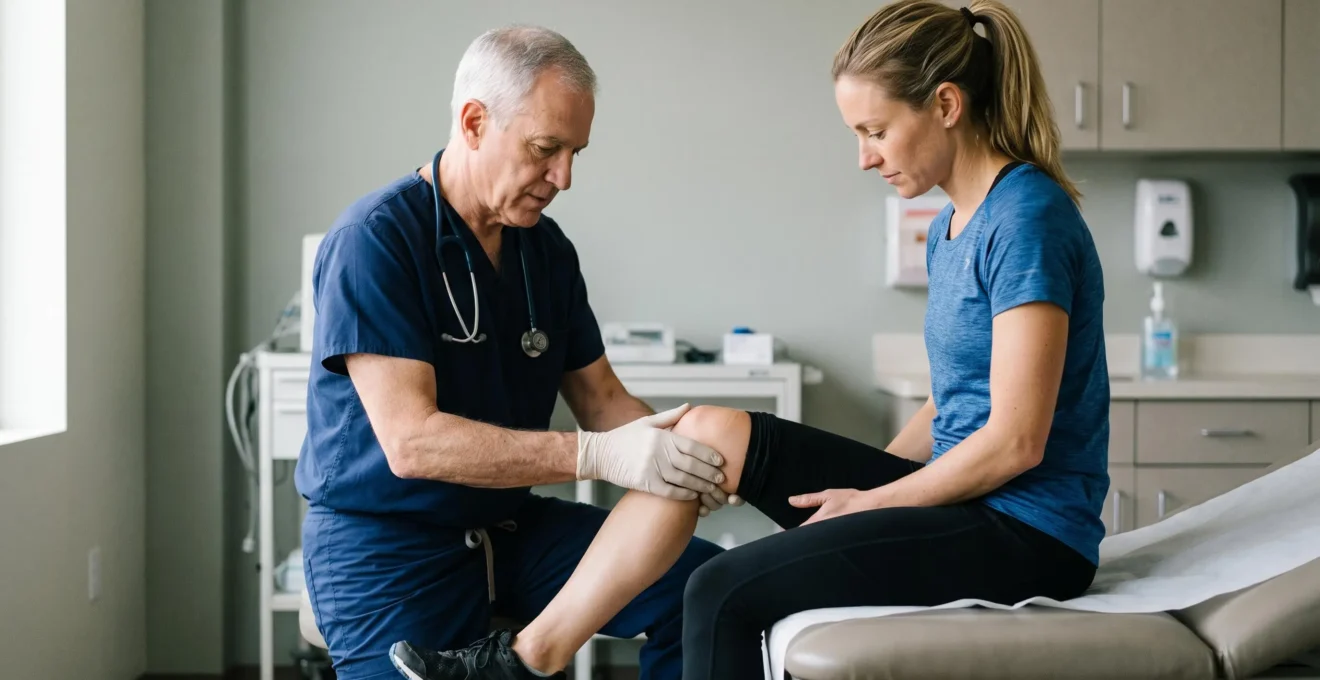
A sudden twist, a deceleration, or a collision — and the knee gives way. For the roughly 45,000 people who undergo ACL reconstruction each year in France alone, according to the Institut national de la santé et de la recherche médicale (Inserm), the path from diagnosis to full recovery raises a stack of practical questions: which graft, what technique, how long off the pitch? This guide walks through the surgical options in clear terms, from the operating table to the return to sport.
This content is provided for informational purposes only and does not constitute medical advice. Please consult a qualified orthopedic surgeon or sports medicine specialist for any decision regarding your health.
What actually happens to the knee when the ACL tears
The anterior cruciate ligament sits at the centre of the knee joint, crossing diagonally to connect the femur to the tibia. Its job is deceptively simple: prevent the tibia from sliding forward and control rotational forces during pivoting movements. When it ruptures — usually during a non-contact deceleration, a side-step, or a landing from a jump — the joint loses that internal anchor. The immediate result is instability: a sensation described by many patients as the knee “going out” during ordinary movements, not just during sport.
That instability is not merely uncomfortable. Left without surgical stabilisation, repeated episodes of giving-way expose the menisci and cartilage to abnormal mechanical stress. Secondary damage to these structures is one of the primary drivers of early-onset osteoarthritis. This is the clinical argument that consistently tips the balance toward surgical reconstruction for active patients under 50, particularly those involved in sports requiring pivoting or cutting movements.
45,000 procedures/year
ACL reconstructions performed annually in France, based on Inserm data
Diagnosis typically combines a clinical examination — the Lachman test and pivot shift test are the standards — with MRI imaging. According to the Haute Autorité de Santé, systematic pre-operative imaging is recommended for every patient being assessed for reconstruction, ensuring the surgeon has a complete picture of associated lesions before planning the intervention.
Inside the operating room: procedure and graft options
ACL reconstruction is performed arthroscopically — a keyhole technique using a camera and small instruments introduced through two or three incisions of less than a centimetre. The surgeon creates a bone tunnel through the tibia and another through the femur, then anchors the graft at both ends to reconstruct the original ligament’s trajectory. The procedure is carried out under general or regional anaesthesia and is completed as an outpatient procedure: the patient arrives in the morning and returns home the same evening. Total surgical time runs at approximately 30 minutes for the core reconstruction.
For patients weighing up the right specialist to operate, consulting a specialized ACL surgeon with documented expertise in both graft selection and lateral reinforcement is consistently cited in orthopaedic literature as a key factor in long-term outcomes.
STG vs ST4: a meaningful distinction
The most commonly used graft source is the hamstring tendon group — specifically the semitendinosus and gracilis tendons from the same leg. The classical configuration, known as STG (semitendinosus and gracilis), harvests both tendons and folds them to create a four-strand graft. The ST4 technique, by contrast, uses only the semitendinosus, which is folded more times to achieve comparable graft diameter while leaving the gracilis entirely intact.
The practical significance of preserving the gracilis becomes apparent during rehabilitation. The gracilis is a secondary stabiliser of the knee and contributes to hamstring chain function. Leaving it untouched means the patient retains more of their original muscle architecture, which translates into a less pronounced strength deficit in the post-operative weeks. The patellar tendon is not harvested under either technique, preserving the extensor mechanism of the knee and the normal mechanics of the kneecap — a factor that simplifies the early rehabilitation phases considerably.
Outpatient procedure: ACL reconstruction under arthroscopy typically requires no overnight hospital stay. Patients are discharged on the day of surgery with a compression bandage and crutches for the first days.
A third graft option — the patellar tendon (Kenneth Jones technique) — remains in use and carries the advantage of bone-to-bone healing at both fixation points. Its trade-off is a higher rate of anterior knee pain post-operatively and a more demanding rehabilitation for the extensor apparatus. Quadriceps tendon grafts represent a newer alternative with growing adoption in revision cases. The choice between these options depends on patient profile, surgeon expertise, and the presence of associated lesions — there is no universally superior graft for all situations.
Lateral reinforcement — ALL and LET
Standard ACL reconstruction restores anterior stability reliably, but the isolated procedure can leave a residual rotational laxity. When a patient experiences a pivot-shift phenomenon — the sensation of the knee rotating uncontrollably during cutting movements — additional lateral stabilisation is often indicated alongside the primary reconstruction.
Two techniques address this: reconstruction of the anterolateral ligament (ALL) and lateral extra-articular tenodesis (LET). Both aim to control the internal rotation of the tibia under load. The ALL reconstruction uses a small graft to rebuild a discrete ligamentous structure on the outer aspect of the knee. The LET procedure uses a strip of the iliotibial band, which is rerouted and fixed to the lateral femoral condyle to create a mechanical check on rotation.
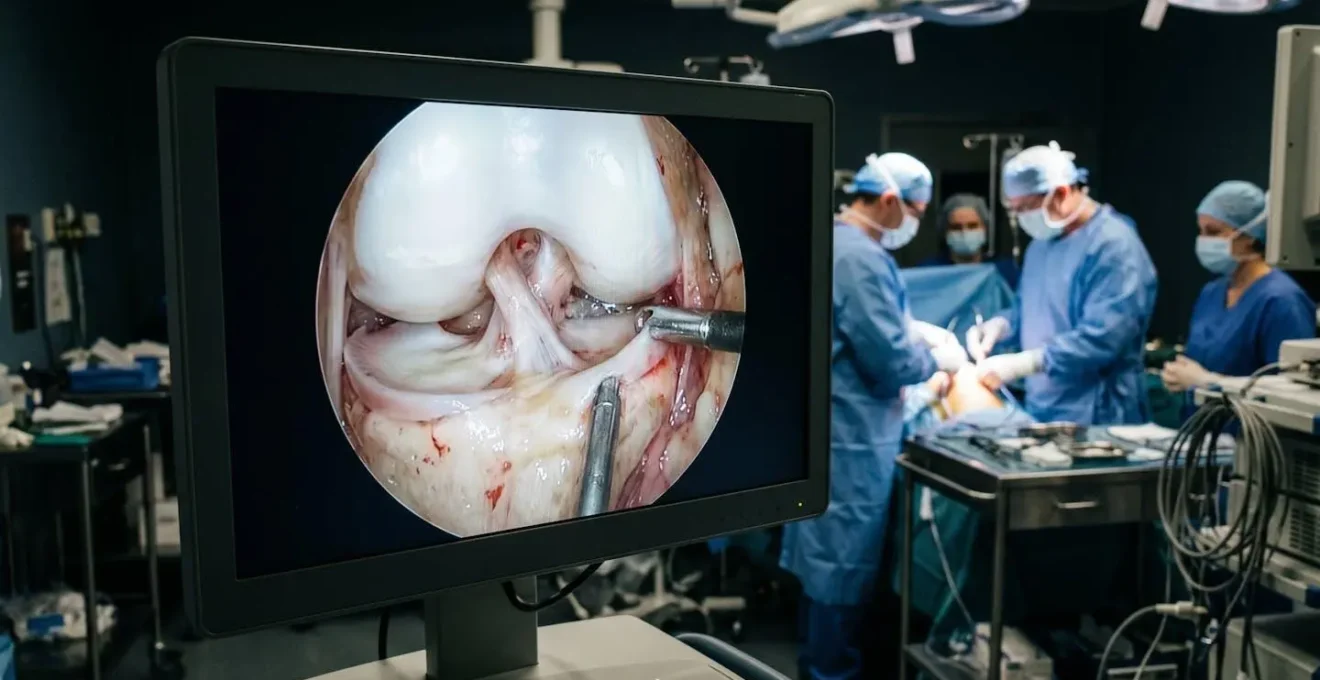
These lateral procedures are not added routinely. The indications most commonly cited include: high-grade rotational instability on pivot-shift testing, age under 25 with hyperlaxity, involvement in high-demand pivot sports, and revision surgeries where a previous reconstruction has failed. The decision is made on an individual basis following clinical assessment.
Recovery timeline: what the data actually shows
One of the most frequently asked questions after diagnosis is also one of the most variable to answer precisely: how long before returning to sport? The honest reply draws a line between partial return — running, cycling, controlled gym work — and full return to competitive play involving contact, pivoting, and match pressure.
Discharge with crutches; knee in compression bandage; pain management begins
Crutches typically discontinued; walking gait normalises; physiotherapy starts in earnest
Straight-line jogging; cycling and swimming reintroduced; hamstring strength monitored
Cutting and pivoting drills; sport-specific training resumes under supervision
Criteria-based return to full competition — strength symmetry and functional tests required
Inserm data indicates that approximately 70% of patients who undergo ACL reconstruction successfully return to sport by the 12-month mark. That figure masks an important nuance: the 30% who do not return by that point are often held back not by surgical failure, but by strength asymmetry between limbs or psychological readiness, rather than structural graft problems.
The ST4 technique’s preservation of the gracilis produces a measurable advantage in this phase. Because hamstring deficit is smaller at weeks 6–12, patients often reach the running thresholds needed to advance their protocol on schedule, rather than waiting for compensatory muscle recruitment to develop around a larger harvesting deficit.
Scenario: a 28-year-old amateur football player
Take a typical case: a recreational centre-back tears their ACL during a Sunday league match in January. Reconstruction with ST4 plus lateral reinforcement is performed six weeks after the injury, once swelling has resolved and quadriceps tone has returned. Rehabilitation starts at week two. By month four, straight-line running is cleared. By month eight, sport-specific agility is tested. The player returns to a full competitive fixture in October — nine months post-surgery. The scenario is realistic, but the actual timeline depends on individual factors including graft biology, rehabilitation compliance, and the demands of the sport.
Patients whose sport involves lower rotational demands — swimmers, cyclists, or road runners — generally hit the functional criteria for return earlier than those playing football, basketball, or skiing. The pivot-shift demands of each sport set the true benchmark, not the calendar date alone.
Risks and recurrence: figures to keep in mind
No surgical procedure carries a zero-risk profile, and ACL reconstruction is no exception. Understanding the actual risk landscape — rather than the worst-case version circulating online — helps patients weigh options with realistic expectations.
The most commonly cited medium-term concern is graft rupture. According to data from the Société Française de Chirurgie Orthopédique et Traumatologique (SOFCOT), the re-rupture rate following reconstruction sits between 5% and 15% across published series — with the upper end of that range concentrated heavily in patients under 25 who return to high-demand pivot sports. The biology of graft maturation explains part of this pattern: the transplanted tendon undergoes a process called ligamentisation over 12 to 18 months, during which it is structurally weaker than a native ligament. Returning to competitive contact sport before this process completes significantly elevates mechanical risk.
Claim: A second ACL tear means the original surgery failed.
Reality: In the majority of re-rupture cases among young athletes, the cause is a premature return to pivoting sport — not a technical error in the original procedure. SOFCOT data identifies early return and age under 25 as the dominant risk factors, not the choice of graft or technique.
Other procedural risks include infection (rare, below 1% in most published series), stiffness from post-operative fibrosis if mobilisation is delayed, graft donor site pain particularly with patellar tendon harvest, and neurovascular injury (exceptionally rare in arthroscopic technique). Deep vein thrombosis is a low but non-zero risk, managed through anticoagulation protocols in the peri-operative period.
The addition of lateral reinforcement procedures does extend operating time marginally and introduces a small additional surgical site on the outer aspect of the knee. The evidence supporting these procedures in appropriate candidates, however, shows a measurable reduction in re-rupture risk — making the risk-benefit calculation relatively straightforward for high-demand patients with positive pivot-shift testing pre-operatively.
Before you book a consultation
Most people arriving at a pre-operative consultation carry the same set of practical concerns: how much time off work, how to manage the early weeks at home, and whether the choice of surgeon significantly changes the outcome. On that last point, the answer is yes — technical expertise in graft selection, lateral reinforcement decision-making, and tunnel positioning all influence long-term joint stability in ways that are difficult to reverse in a revision setting.
-
Which graft source do you recommend for my age and sport — and why not an alternative?
-
Is my pivot-shift positive enough to warrant lateral reinforcement alongside reconstruction?
-
What functional criteria will determine my return to full training — not just weeks elapsed?
-
Are there any associated meniscal or cartilage lesions on the MRI that affect the reconstruction plan?
Pre-operative preparation matters more than many patients expect. The Haute Autorité de Santé recommends systematic imaging assessment before any ligament reconstruction — and that evaluation serves a dual purpose: confirming the ACL tear and identifying any secondary lesions (meniscal tears, cartilage damage) that may need addressing in the same operative session or that could complicate rehabilitation if overlooked.
On the lifestyle side, maintaining the power of daily activity through low-impact movement in the weeks before surgery — cycling, swimming, stationary work on quadriceps tone — consistently produces better early post-operative outcomes. Patients who arrive at surgery with a strong quadriceps and adequate range of motion generally mobilise faster and are less vulnerable to post-operative stiffness.
Nutrition during the recovery period is a key factor that often receives less attention than it deserves. Tendon biology and muscle repair are protein-dependent processes. Ensuring adequate intake throughout the recovery phase supports tissue remodelling, which is essential for graft maturation quality — a consideration that is directly linked to the the benefits of a balanced plate during extended rehabilitation programmes.
Is ACL surgery always necessary after a complete tear?
Not in every case. Older sedentary patients or those with low functional demands may achieve acceptable stability through physiotherapy alone. For active individuals under 50 — especially those in pivot sports — surgical reconstruction is generally recommended to prevent secondary meniscal and cartilage damage from repeated instability episodes.
How long does the surgery itself take?
The arthroscopic reconstruction takes approximately 30 minutes. When lateral reinforcement is added, total operating time increases modestly. The procedure is performed as an outpatient surgery — no overnight stay is required.
What is the difference between ALL reconstruction and LET?
Both address rotational instability on the outer aspect of the knee. ALL reconstruction rebuilds a discrete ligamentous structure using a small graft. LET repurposes a strip of the iliotibial band as a mechanical check on tibial rotation. The choice between them depends on the anatomy, the degree of instability, and the surgeon’s technical preference — there is no single correct answer applicable to all patients.
When can driving resume after ACL surgery?
This depends on which leg is operated on and on the surgeon’s post-operative protocol. For left-leg surgery in manual-transmission vehicles, return to driving may be possible within two to three weeks. For the right leg, the timeline extends until reaction speed and strength are sufficient for safe braking — typically four to six weeks. Always confirm with your surgical team before driving.
What to keep in mind
ACL reconstruction is a well-established procedure with a strong evidence base — but the quality of the outcome depends on decisions made before, during, and long after the surgery itself. Graft selection, the decision to add lateral reinforcement, and the rigour of the rehabilitation programme all carry weight. None of these variables can be assessed meaningfully without a detailed individual evaluation.
What to keep in mind:
- This content is for informational purposes only and does not replace personalised medical advice.
- Every patient’s situation is unique and requires individual assessment by a qualified orthopedic surgeon.
- Treatment recommendations should be discussed with your healthcare provider based on your specific condition.
For any decision regarding your knee, consult your orthopedic surgeon or sports medicine specialist.